She Wanted a C. Getting One Still Wrecked Her Week.

Reese is an A student.
This year, she picked one class specifically to not be an A student in.
She wanted a real challenge. Something hard enough that she'd have to actually build the skills we keep talking about: advocating with a teacher, asking for the accommodation instead of waiting for it, working through a rough draft instead of turning in the first one.
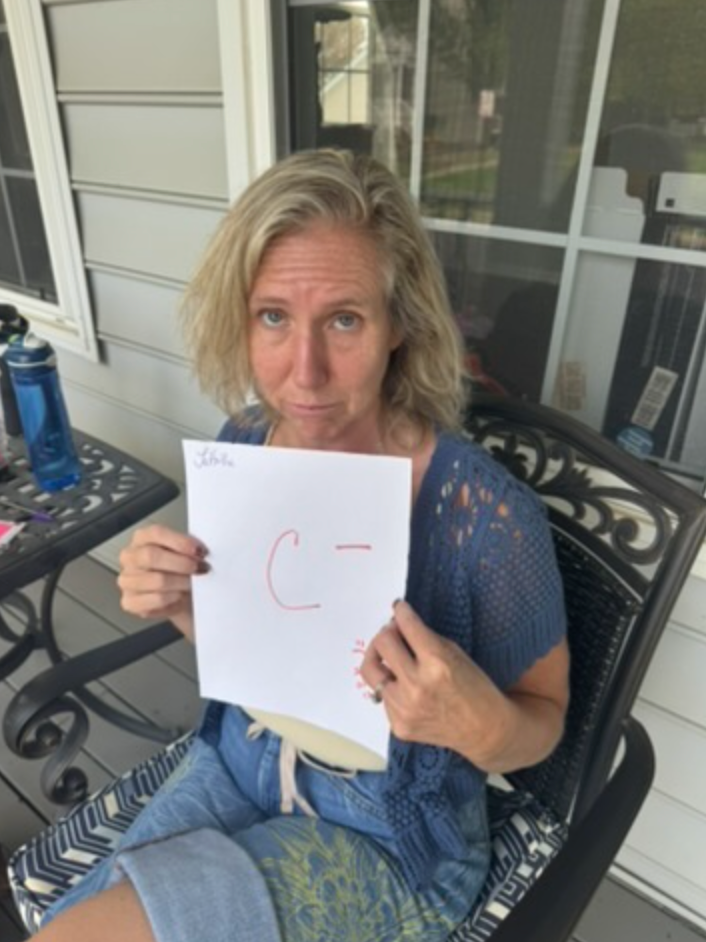
Her stated goal going in was a C.
Not because she couldn't do better. Because a C in a hard class, earned by doing those things, was the whole point.
Then she got the C.
Having a plan for the grade didn't mean she had a plan for how it would feel. Grades are concrete. You can see them, compare them, screenshot them.
"I practiced initiating a conversation with my teacher" doesn't show up anywhere.
So when the C landed, the only data point in front of her was the number. And the number said "not good enough," even though everything underneath it said the opposite.
This is the trap for a lot of our twice-exceptional kids especially. They're smart, often gifted, and also managing ADHD or other executive function challenges. Which means they're constantly straddling two truths: I can do hard things and the basics take real effort for me.
The goals that address that second truth are invisible by design.
The grade is loud. The skill is quiet. So the skill loses, even when it's winning.
What we did with Reese was make the quiet stuff loud. We sat down and turned her real goals into a list she could actually check off:
Did you email the teacher first?
Did you ask for the accommodation before you were struggling?
Did you revise instead of settling?
Every one of those got a yes this term. Two scoreboards, side by side. For once, the one that mattered more wasn't the one with a letter on it.
Try this with your own student:
TIP
Write the real goal down, before the grade exists. Not "do well in the class." The specific behavior: "ask a question in office hours," "turn in a draft before it's due," "advocate for extended time."
Score the behavior separately from the grade. A simple yes/no checklist works. The point is giving the skill its own visible place to land.
Celebrate the checklist out loud, especially when the grade disappoints. "You emailed her before you were behind, that's exactly the plan" lands differently than "the grade doesn't matter."
GROW
A grade is one number generated by other people's rubrics. A self-advocacy win is evidence your kid can generate their own outcomes. For twice-exceptional kids, that matters even more: their intelligence can mask how much effort things like initiating and self-advocating actually take.
DIVE
If your student is chasing a goal that doesn't show up on a report card, we'd love to help you build a way to track and celebrate it.


Comments